Sourcing Himalayan Shilajit in Bulk: Understanding Fulvic Acid Standardization, Heavy Metal Testing, and FBA Readiness
A definitive B2B procurement guide for importing bulk Shilajit resin from India to the GCC and global markets, covering NMR testing, heavy metal compliance, and Amazon FBA white-label readiness.

Table of Contents
Direct Answer: The minimum order quantity (MOQ) for importing bulk purified Himalayan Shilajit resin from India to the GCC is typically 25 kilograms per steel or food-grade HDPE drum. True B2B procurement requires a Certificate of Analysis (COA) confirming a minimum of 50% fulvic acid standardization and heavy metal levels (Lead, Arsenic, Mercury) well below strict international threshold limits.
Procuring authentic Himalayan Shilajit for nutraceutical manufacturing or Amazon FBA white-labeling requires bypassing low-quality extract powders and going directly to the source. This guide details the critical compliance and logistics parameters for importing wholesale Shilajit resin from India.
Shilajit Extract Standardization: Fulvic Acid Metrics
The primary value driver in bulk Shilajit export price per kg in India is the fulvic acid concentration.
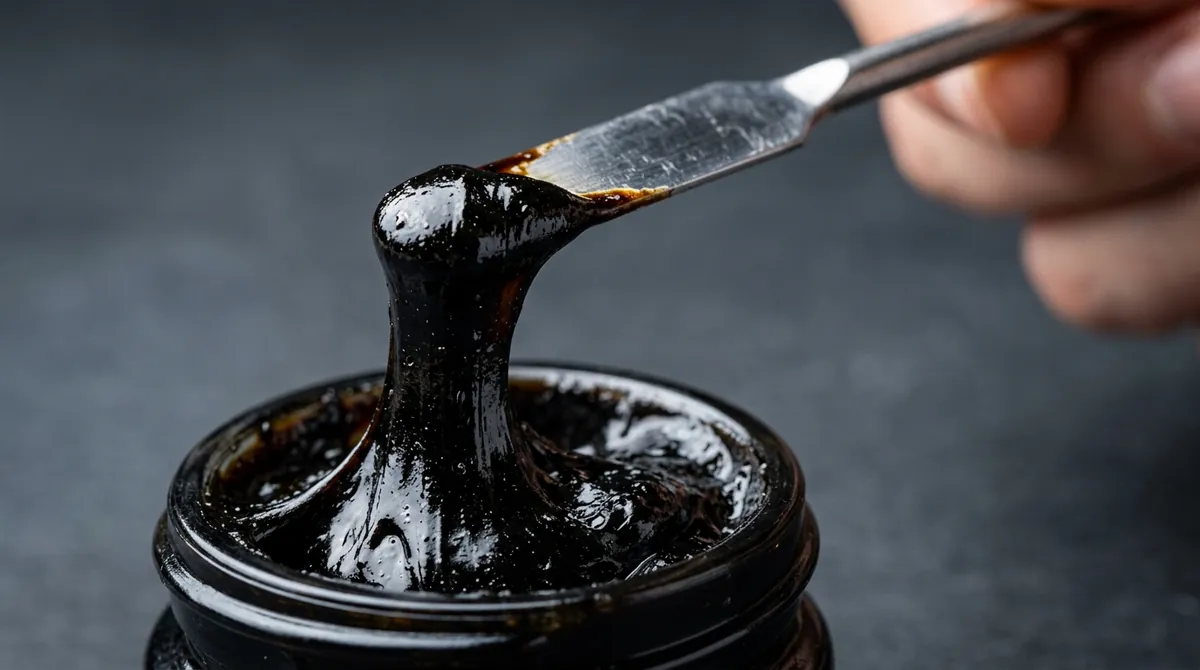
For high-margin wholesale manufacturing (including capsules, gummies, and pure resin drops), the industry standard mandates a minimum 50% to 60% fulvic acid concentration. Lower concentrations typically indicate heavy dilution with maltodextrin or poor extraction methodologies.
| Specification | Standard Grade | Premium FBA Grade |
|---|---|---|
| Fulvic Acid | 20% - 40% | 50% - 70% |
| Form | Powder Extract | Purified Resin |
| Solubility | Partial (requires heat) | 100% Water Soluble |
| Humic Acid | < 10% | > 10% |
Heavy Metal Testing and Compliance for Indian Shilajit Export
Because Shilajit is essentially a humic substance extruded from high-altitude rock, heavy metal contamination is the single largest reason for customs rejection at destination ports like Dubai or Jebel Ali.
Before initiating any FCL (Full Container Load) or LCL (Less than Container Load) air freight shipment, buyers must secure an independent, third-party lab test (such as Eurofins or SGS) verifying:
- Lead (Pb): < 10 ppm
- Arsenic (As): < 3 ppm
- Mercury (Hg): < 1 ppm
- Cadmium (Cd): < 1 ppm
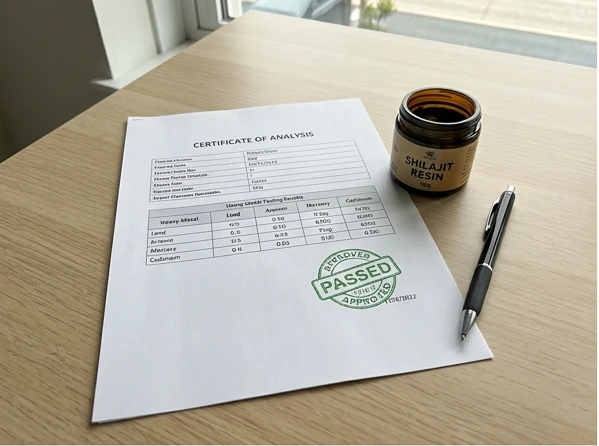
These heavy metal testing parameters are non-negotiable for white label shilajit resin manufacturers in India intending to export to strictly regulated markets like the UAE (Dubai Municipality regulations) or the US (FDA).
Amazon FBA Readiness and Packaging Logistics
For brands scaling through Amazon FBA, sourcing raw materials efficiently is only half the battle.
Most bulk orders are shipped in 25-kilogram airtight HDPE drums to prevent moisture loss. However, many white-label suppliers offer pre-packaged FBA-ready configurations, typically in 15-gram, 30-gram, or 50-gram ultraviolet (UV) glass jars.
When importing pre-packaged units, ensure the Bill of Lading (BOL) and commercial invoice strictly declare the HS Code (typically 2106.90 for dietary supplements) to ensure smooth customs clearance and avoid unexpected tariffs.
Sourcing with Global Bridge Trading
Navigating the complexities of heavy metal testing and fulvic acid standardization requires experienced on-the-ground agents. Global Bridge Trading handles the entire procurement lifecycle—from verifying Indian extraction facilities to managing the final air or sea freight logistics directly to your warehouse.