
Importing Frozen Beef to the GCC: SIF Approval, Halal Slaughter Traceability, and Port Clearance
From Brazilian slaughterhouse SIF audits to cold-chain temperature telemetry at Jeddah Islamic Port, here is the technical roadmap for importing bulk frozen boneless beef into Saudi Arabia and the UAE.

Table of Contents
Bottom Line Up Front (BLUF): Sourcing commercial container loads of frozen boneless beef from Brazil or India into the GCC requires strict regulatory alignment across three vectors: (1) active bilateral approval of the specific establishment (SIF plant number in Brazil or APEDA-integrated abattoir in India) on the SFDA or UAE MoIAT whitelist, (2) unbroken veterinary electronic traceability linking every carton back to an accredited Halal slaughter body under GSO 993/2015, and (3) zero cold-chain excursions exceeding $-15^\circ\text{C}$ on maritime data loggers. Importers who verify electronic certificates prior to vessel departure avoid costly multi-week demurrage disputes at Jeddah Islamic Port and Jebel Ali.
1. The Gatekeeper: Bilateral SIF Establishment Whitelists
In the international beef trade, purchasing from a registered meat packer is not enough. You must ensure the processing facility holds an active, country-specific export accreditation for your destination port.
In Brazil, meat inspection is governed by the Federal Inspection Service (SIF - Serviço de Inspeção Federal) under the Ministry of Agriculture, Livestock and Food Supply (MAPA). However, a Brazilian slaughterhouse holding a valid SIF number is not automatically authorized to ship to Saudi Arabia or the UAE.
Brazilian Meat Packer (e.g., SIF 1125 / JBS / Marfrig)
  │
  ├── MAPA Domestic Federal Inspection (Sanitary Approval)
  │     ▼
  ├── SFDA Foreign Audit Inspection (Bilateral Agreement KSA)
  │     ▼
  ├── GCC Accreditation (UAE MoIAT / ESMA Halal Registry)
  │     ▼
  └── RESULT: Authorized for Commercial Export to GCC
The “Temporary Delisting” Risk
The Saudi Food and Drug Authority (SFDA) and UAE authorities regularly suspend specific plant numbers based on sanitary re-inspections, avian or bovine epidemiological alerts, or paperwork irregularities.
Before opening a Letter of Credit (LC) with any Brazilian trading desk:
- Cross-check the establishment’s 3- or 4-digit SIF number directly against the SFDA Approved Foreign Establishments Portal.
- Verify that the specific sub-category (e.g., Frozen Boneless Bovine Meat - HS Code 0202.30) is explicitly listed, rather than merely Chilled Beef or Offal.
2. Primal Cuts & Specifications for GCC HORECA and Retail
Commercial buyers across Dubai, Riyadh, and Doha purchase frozen beef segmented into vacuum-packed primal cuts, boxed into 20 kg to 25 kg export master cartons.
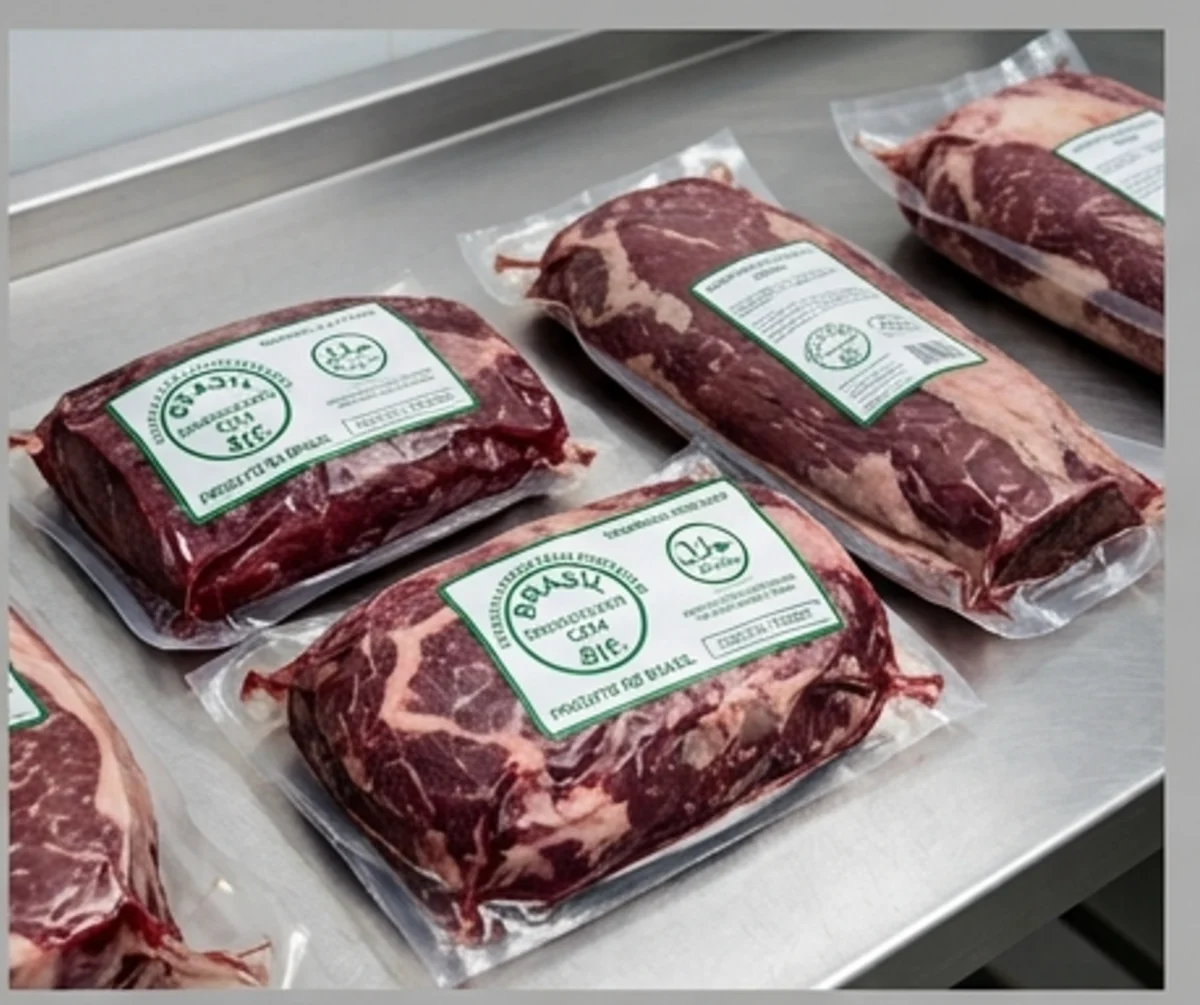
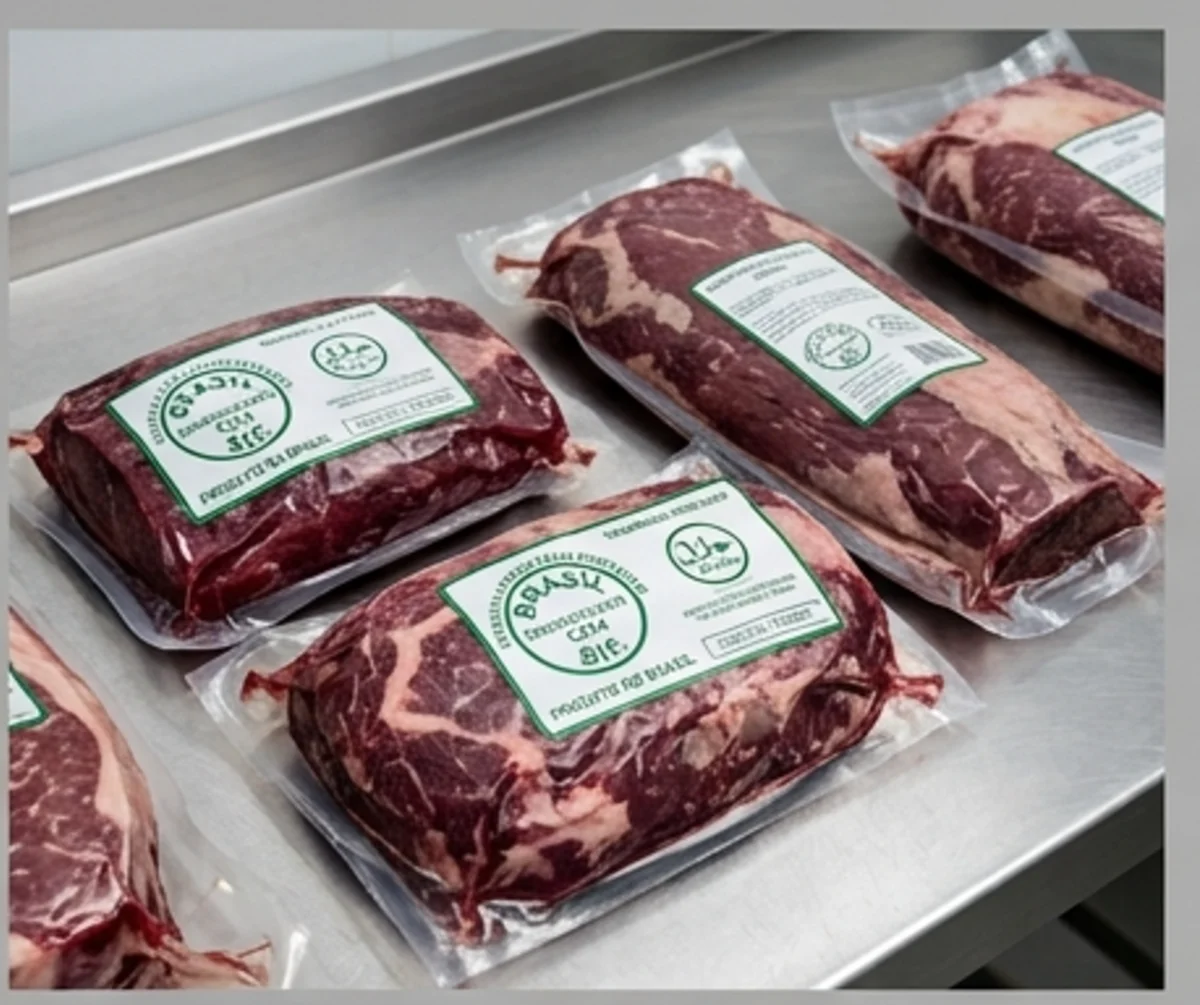 Figure 1: Vacuum-sealed Brazilian boneless beef primal cuts featuring official green SIF veterinary stamps and bilingual Halal labels.
| Commercial Cut Name | Brazilian Trade Name | Anatomical Origin | Primary GCC Application | Export Packaging Specification |
|---|---|---|---|---|
| Chuck Tender | Lagarto do Braço | Forequarter / Shoulder | Institutional Catering, Stews, Minced Beef | IWP Vacuum, 20–25kg Master Carton |
| Topside / Inside | Coxão Mole | Hindquarter / Thigh | Supermarket Retail, Roasts, Shawarma | IWP Vacuum, 20–25kg Master Carton |
| Striploin | Contra-Filé | Loin / Back | HORECA, Steakhouses, Hotel Buffets | Vacuum Pack, 4–6 cuts per carton |
| Tenderloin | Filé Mignon | Loin / Internal Muscle | 5-Star Hospitality, Fine Dining | Individually Vacuum Packed, 15–20kg carton |
| Brisket (Point/Flat) | Peito Bovino | Lower Chest | Pastrami, Smoked BBQ, Fast Food | Multi-piece vacuum pack, 25kg carton |
| Trimmings (80/20 & 70/30) | Recortes | Multi-primal deboning | Industrial Burger Patty & Sausage Plants | Naked block or poly-lined 25kg carton |
Aging and Visual Standards: The Iwana Index
Commercial buyers in the Middle East inspect meat color using standardized visual metrics. While chilled beef is evaluated on marbling score (BMS 1 to 9), frozen bulk beef is scrutinized for:
- Freezer Burn / Desiccation: Zero white dehydrated patches on exterior fat caps.
- Purge Loss: Moisture accumulation inside vacuum bags must remain below 2.5% by weight upon thawing.
- Fat Color: Must be ivory white to light cream; deep yellow fat indicates older dairy cows, often rejected by GCC supermarket buyers.
3. Halal Traceability Under GSO 993/2015
Halal compliance in the GCC has evolved far beyond a rubber-stamped letter. Under Gulf Technical Regulation GSO 993/2015 (Animal Slaughtering Requirements According to Islamic Rules):
Slaughtering Protocol
- No Stunning or Controlled Reversible Stunning: The slaughter must be performed by a sane, adult Muslim who invokes the Tasmiyah (Bismillahi Allahu Akbar) at the time of incision.
- Incision Requirements: Severing of the trachea (windpipe), esophagus (gullet), and both jugular veins/carotid arteries in a single swift cut to ensure rapid and complete exsanguination.
- Accredited Halal Bodies: The certificate must originate exclusively from an SFDA-accredited Islamic entity operating within Brazil (such as FAMBRAS Halal, Cibal Halal, or Cdial Halal).
Bilingual Carton Labeling Mandate
Every individual master carton must carry an indelibly printed or waterproof adhesive label displaying:
- Name of Product: Frozen Boneless Beef / لحم بقر مجمد بدون عظم
- Slaughterhouse Name and SIF Registration Number
- Approved Halal Certification Body Logo and Registration ID
- Slaughter Date (تاريخ الذبح) and Production Date (تاريخ الإنتاج) in uncoded Day-Month-Year format
- Expiry Date (تاريخ انتهاء الصلاحية): Maximum 12 months for frozen boneless beef under GCC standards
- Storage Conditions: Keep Frozen at or below -18°C / يحفظ مجمد في حرارة 18- مئوية أو أقل
4. Cold Chain Telemetry: Navigating the 35-Day Voyage
A container of frozen beef sailing from the Port of Santos, Navegantes, or Paranaguá to the Persian Gulf spends 30 to 40 days at sea, traversing tropical waters with high ambient heat.
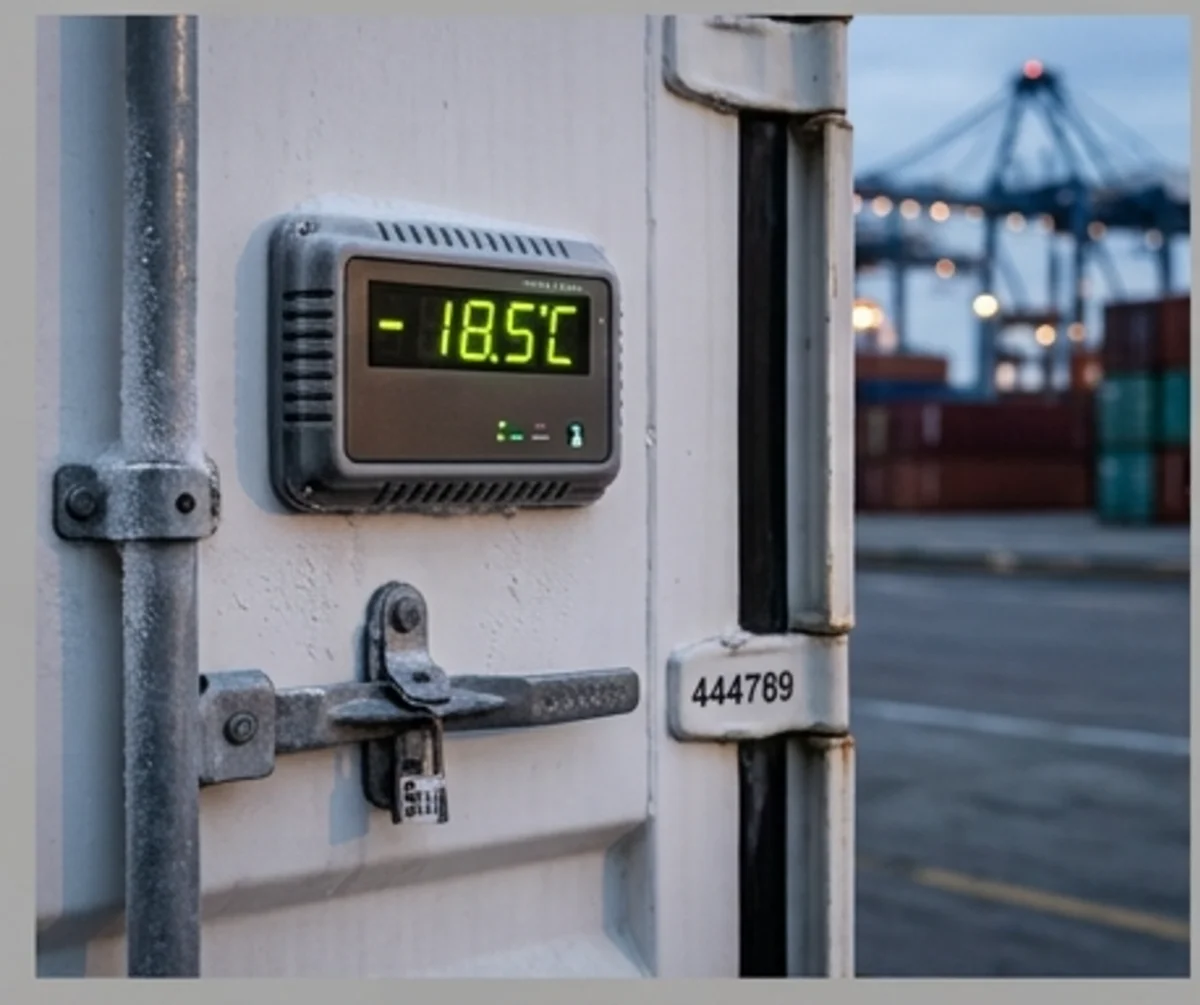 Figure 2: Digital temperature verification on a 40ft High-Cube refrigerated reefer container at the port cargo terminal.
The Defrost Spike vs. Cold-Chain Excursion
Refrigerated containers (Reefers) automatically enter auto-defrost cycles every 6 to 12 hours, blowing warm air over evaporator coils to melt ice buildup.
During this 20-minute defrost cycle, the data logger sensor will record a transient temperature rise (sometimes climbing to $-12^\circ\text{C}$ or $-10^\circ\text{C}$ for a few minutes) before rapidly returning to $-18^\circ\text{C}$.
Typical Sea Transit Reefer Profile (Normal vs Violation):

Temperature (°C)
  0 ───┬────────────────────────────────────────────────────────
       │
-10 ───┼──────▲──────────────▲──────────────▲─────── (Defrost Spikes: <25 mins)
       │     / \            / \            / \
-15 ───┼────/───\──────────/───\──────────/───\────── MAXIMUM LEGAL THRESHOLD
       │   /     \        /     \        /     \
-18 ───┴──/───────\──────/───────\──────/───────\─── SET POINT (-18°C)
          ══════════════════════════════════════════
          Continuous core temperature remains stable at -18°C
Customs Inspection Red Flag: Port inspectors at King Abdulaziz Port Dammam or Dubai Jebel Ali download the raw data logger file (.csv/.pdf). If the temperature remains above $-15^\circ\text{C}$ for more than 4 continuous hours, the shipment is flagged for microbial and volatile basic nitrogen ($TVB-N$) laboratory testing, risking immediate quarantine or rejection.
5. Case Study: Resolving a Detained Meat Consignment at Jeddah Port
The Scenario
A Saudi distributor imported two 40-foot reefer containers (54 metric tonnes) of Brazilian frozen chuck tender through Jeddah Islamic Port. Upon arrival:
- The Issue: The container temperature logger recorded an unexplainable 8-hour temperature spike to $-11.5^\circ\text{C}$ during bunkering at Port Klang, Malaysia.
- The Secondary Friction: The Veterinary Health Certificate issued in Brasília listed the establishment name as “Frigorífico JBS S/A”, while the FASEH electronic import permit displayed “JBS S.A. Unidade Mozarlândia”.
The Resolution Protocol
- Physical Core Sampling: Under the supervision of SFDA inspectors, 10 cartons from the center and door-end of each container were cored using sterilized borer drills. Core temperatures were verified at $-17.8^\circ\text{C}$, confirming that thermal inertia prevented internal product thawing despite ambient reefer ambient air warming.
- Accelerated Lab Analysis: Samples were dispatched to an accredited laboratory for Total Plate Count (TPC), Salmonella, and E. coli O157:H7 screening, returning zero pathogenetic contamination within 72 hours.
- Consular Addendum: The Brazilian exporter obtained an urgent formal clarification addendum from MAPA confirming that SIF 1125 corresponds to both corporate entity variations.
- Outcome: Cargo released without customs fines within 6 business days, saving the importer substantial amounts in potential terminal demurrage and plug-in power fees.
6. Strategic FAQs for Meat Importers and QA Managers
What is the maximum allowable shelf life for imported frozen beef in the GCC?
Under GSO 150-1 (Expiration Periods of Food Products), the maximum allowable shelf life for frozen boneless beef stored at or below $-18^\circ\text{C}$ is 12 months from the date of slaughter. Consignments arriving with less than 4 months of remaining shelf life are frequently subject to rejection or clearance restrictions.
Can Indian frozen boneless buffalo meat (carabeef) be imported into Saudi Arabia?
Yes, provided the meat originates exclusively from APEDA-approved, SFDA-inspected integrated abattoirs. Indian carabeef accounts for a substantial volume of commercial catering and processed meat formulations in the GCC due to its lean yield and competitive wholesale structure.
Who pays for reefer electricity and demurrage during customs quarantine?
The importer of record is responsible for all container terminal storage fees, shipping line demurrage, and reefer electricity plug-in charges. This is why pre-clearing electronic documentation prior to vessel berthing is critical.
What documents must accompany a commercial frozen beef shipment?
Every consignment requires:
- Original Commercial Invoice and Packing List (detailing net/gross weights and carton counts per cut)
- Clean on Board Ocean Bill of Lading (B/L)
- Official Government Veterinary Sanitary Certificate issued by the exporting nation’s agricultural ministry
- Official Halal Slaughter and Halal Supervision Certificate issued by an accredited Islamic body
- Certificate of Origin issued by the relevant Chamber of Commerce
- Third-party Pre-shipment Inspection Certificate (SGS, Cotecna, or Intertek)
7. Trade Secure Meat Shipments with GB Trading
At Global Bridge Trading, we eliminate the logistical and regulatory pitfalls of the international meat trade. We partner exclusively with tier-1, SFDA-approved abattoirs in Brazil, India, and Australia to guarantee:
- 100% Whitelist Verification: Guaranteed active SIF and APEDA plant registration prior to contract execution.
- Full Halal Compliance: Dual-inspected slaughter documentation conforming to GSO 993/2015.
- Continuous Telemetry Tracking: Real-time satellite-linked reefer monitoring ensuring zero unrecorded thermal spikes.
Ready to secure premium frozen beef allocations or request specification sheets?
- Explore our verified Brazil to Saudi Arabia Frozen Beef Trade Route
- Review our Brazil to UAE Trade Route Logistics
- Read our guide on Navigating Brazilian SIF Plant Certifications
👉 Contact our Protein Trading Desk on WhatsApp to discuss current cuts, SIF plant options, and CFR delivery schedules.