
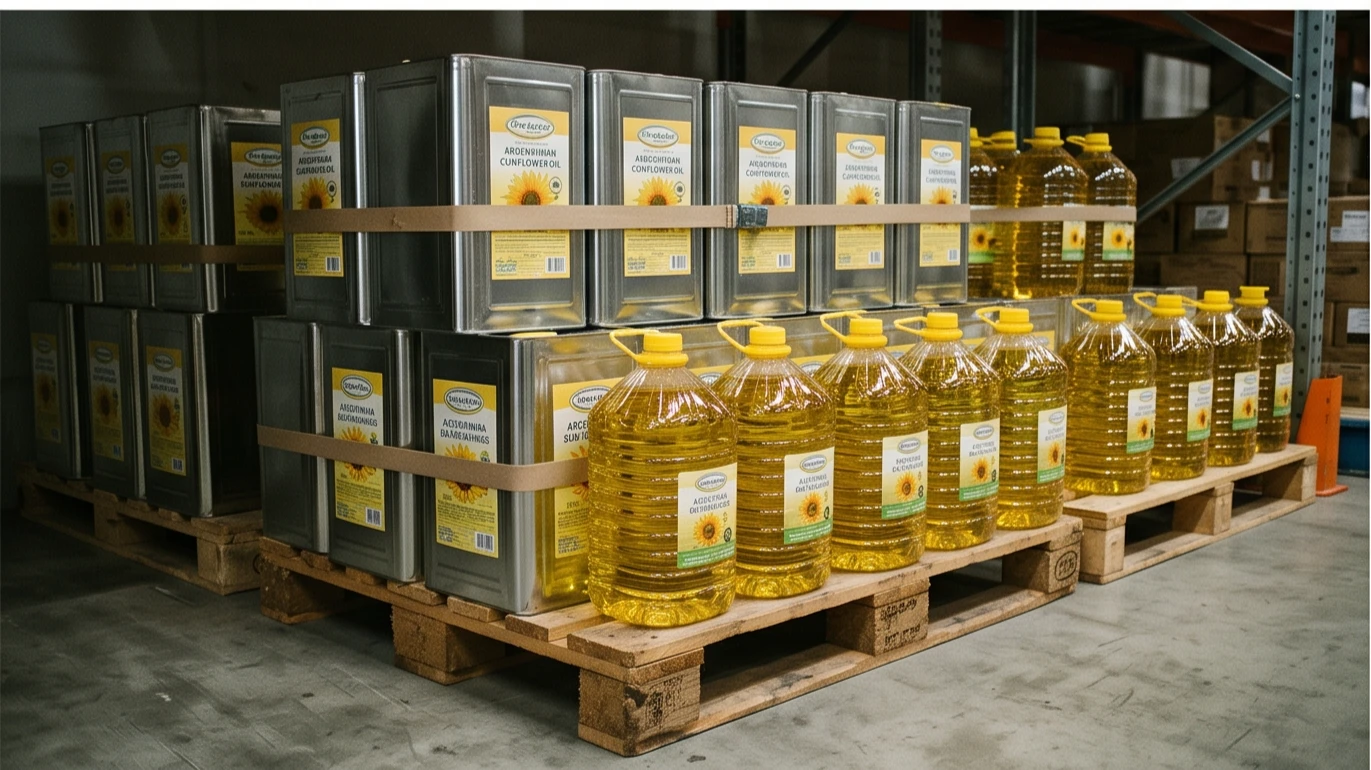
Importing Argentinian Edible Oils to Qatar & Kuwait: GSO Compliance Guide
Navigate the GCC Standardization Organization (GSO) requirements, Halal certification, and bulk logistics when importing sunflower and soybean oils from Argentina to the Middle East.

Table of Contents
Argentina is a global powerhouse in the production of edible oils, particularly sunflower and soybean oil. For wholesale B2B buyers in the GCC—specifically Qatar and Kuwait—Argentina represents a critical sourcing hub for the commercial catering and HORECA sectors.
However, clearing bulk edible oils through Qatari and Kuwaiti customs requires strict adherence to the GCC Standardization Organization (GSO) regulations. This guide outlines the essential compliance steps to ensure your Argentinian imports clear customs smoothly.
1. GSO Technical Standards for Edible Oils
Both Qatar and Kuwait enforce the unified GSO standards for edible oils. To pass port health inspections, your Argentinian supplier’s Certificate of Analysis (CoA) must explicitly verify compliance with GSO parameters.
Key Parameter Limits
- Peroxide Value: Must not exceed 10 milliequivalents of active oxygen per kilogram of oil. High peroxide levels indicate rancidity and will lead to immediate rejection.
- Free Fatty Acids (FFA): The acid value must be kept strictly below the GSO threshold (typically 0.6 mg KOH/g for refined oils).
- Aflatoxin Levels: Given that soybean and sunflower oils are derived from crops susceptible to mold during transit, customs laboratories in Doha and Kuwait City will conduct rigorous aflatoxin testing.
B2B Importer Tip: Do not rely solely on the factory’s CoA. Commission an independent pre-shipment inspection (via SGS or Bureau Veritas) in Buenos Aires or Rosario to test against GSO standards before the oil is loaded onto the vessel.
2. Packaging and Arabic Labeling Mandates
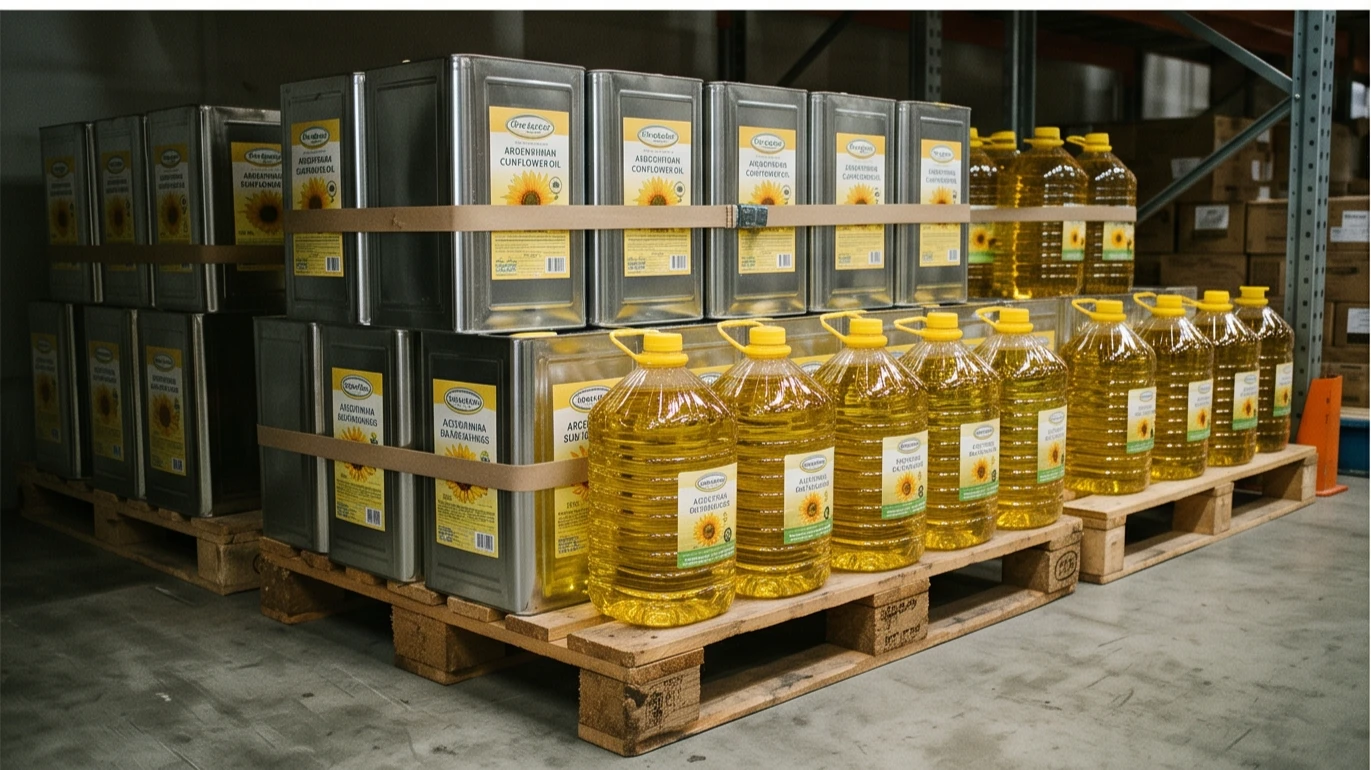
Importing edible oils in retail-ready packaging (e.g., 1L, 3L, or 5L PET bottles) requires strict compliance with GSO labeling regulations.
Mandatory Labeling Information
All labels must be printed in clear Arabic (bilingual English/Arabic is preferred) and include:
- Exact product name (e.g., “100% Pure Refined Sunflower Oil”).
- Country of Origin (“Product of Argentina”).
- Production and Expiry Dates (printed directly on the bottle, not just the carton).
- Nutritional facts formatted according to GSO standards.
- Storage instructions.
Bulk Logistics (Flexitanks)
For B2B buyers importing bulk oils via Flexitanks or ISO tanks for local repackaging, the labeling requirements apply to the bulk container itself and the accompanying commercial documentation. You must provide a clear “Declaration of Intended Use” to customs, specifying that the oil is for industrial or repackaging purposes.
3. Halal Certification and Phytosanitary Requirements
Even though edible oils are plant-based, they are subject to strict Halal verification.
Halal Certification
Qatari and Kuwaiti customs require a Halal Certificate issued by an Islamic center in Argentina that is officially recognized by the respective Gulf authorities. This ensures that no non-Halal processing aids, defoaming agents, or animal-derived clarifying agents were used during the refining process.
Phytosanitary Certificate
A Phytosanitary Certificate from the Argentinian SENASA (National Food Safety and Quality Service) is mandatory. It must confirm the product is fit for human consumption and free from any quarantine pests.

Secure Your Wholesale Supply Chain
Importing edible oils requires managing complex logistics—from preventing oxidation during the long ocean transit from South America to navigating rigid GCC laboratory testing upon arrival.
At GB Trading, we streamline this process. If you are preparing to source commercial volumes of sunflower or soybean oil, review our live routes for Argentina to Qatar Edible Oil and Argentina to Kuwait Edible Oil for real-time logistics, supplier verification, and regulatory support.